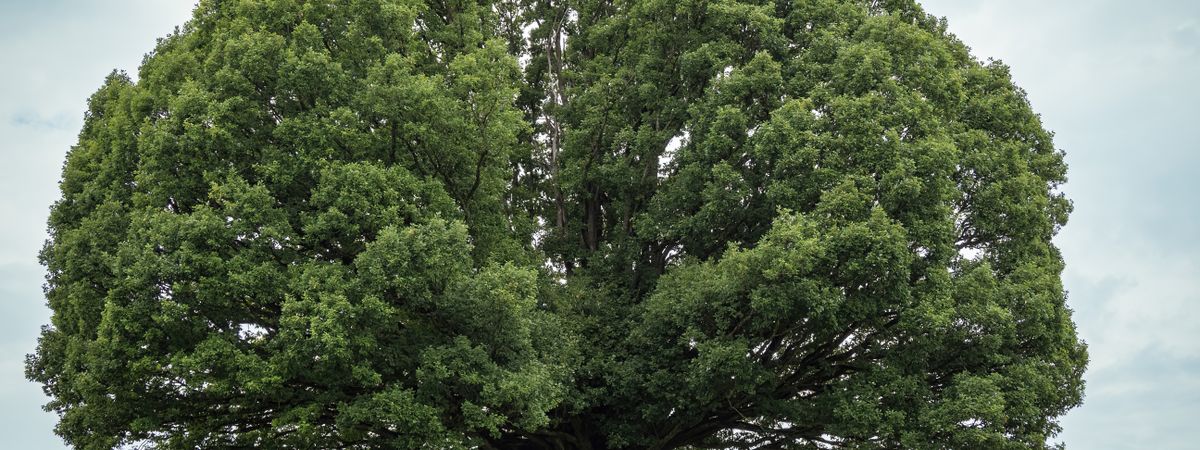
The quickest way to turn a £500 tree job into a £20,000 problem is to cut a protected tree without consent. This guide explains how tree protection works in Crawley and West Sussex, how to check whether your tree is covered, and how consent actually gets granted.
What a TPO is
A Tree Preservation Order is a legal order made by Crawley Borough Council protecting a specific tree, group of trees or woodland because of its amenity value. A TPO makes it an offence to fell, prune, uproot or wilfully damage the tree without the council's written consent. It's a criminal matter, not a slap on the wrist: fines can reach £20,000 per tree in the magistrates' court. Unlimited in serious cases, and you can be required to replant.
Conservation areas work slightly differently
Crawley town centre and several surrounding villages contain conservation areas. Inside one, most trees are automatically protected even without an individual TPO: you must give the council six weeks' written notice before doing works to any tree with a trunk wider than 75mm at chest height. The council uses those six weeks to decide whether to let the work proceed or to protect the tree with a full TPO.
How to check whether your tree is protected
Don't guess. Check. Crawley Borough Council maintains TPO records and can confirm the status of any tree on or overhanging your property; their planning pages include an interactive map of TPOs and conservation areas. We check protection status as a standard part of every quote. It costs you nothing and it's caught many a surprise.
Getting consent
Works to a TPO tree need a formal application describing exactly what's proposed, and the wording matters, because "cut it back a bit" gets refused where "crown reduction of up to 2 metres to previous pruning points, and removal of deadwood" gets approved. Applications are decided within eight weeks (six weeks' notice for conservation-area trees). Consent is commonly granted for sound arboricultural reasons: deadwood removal, clearance from buildings, safe reduction of storm-damaged limbs. It's rarely granted for "it blocks my light" alone. We prepare and submit these applications for customers as part of the job. See our tree survey and TPO service.
The exceptions worth knowing
You don't need consent for the removal of dead wood from a living protected tree, or for works to a tree that presents an urgent risk of serious harm, though for anything beyond making the tree safe, you must give the council notice as soon as practicable, keep photographic evidence, and expect to justify it. If a protected tree has already failed in a storm, our emergency team documents everything so the paperwork stands up afterwards.
Unsure about a tree? Call 01293 310077. Checking its status is free, and a lot cheaper than the fine.
Free, no-obligation quotes across Crawley & the Crawley area
Call 01293 310077